Chosen for the software, set up before it ships
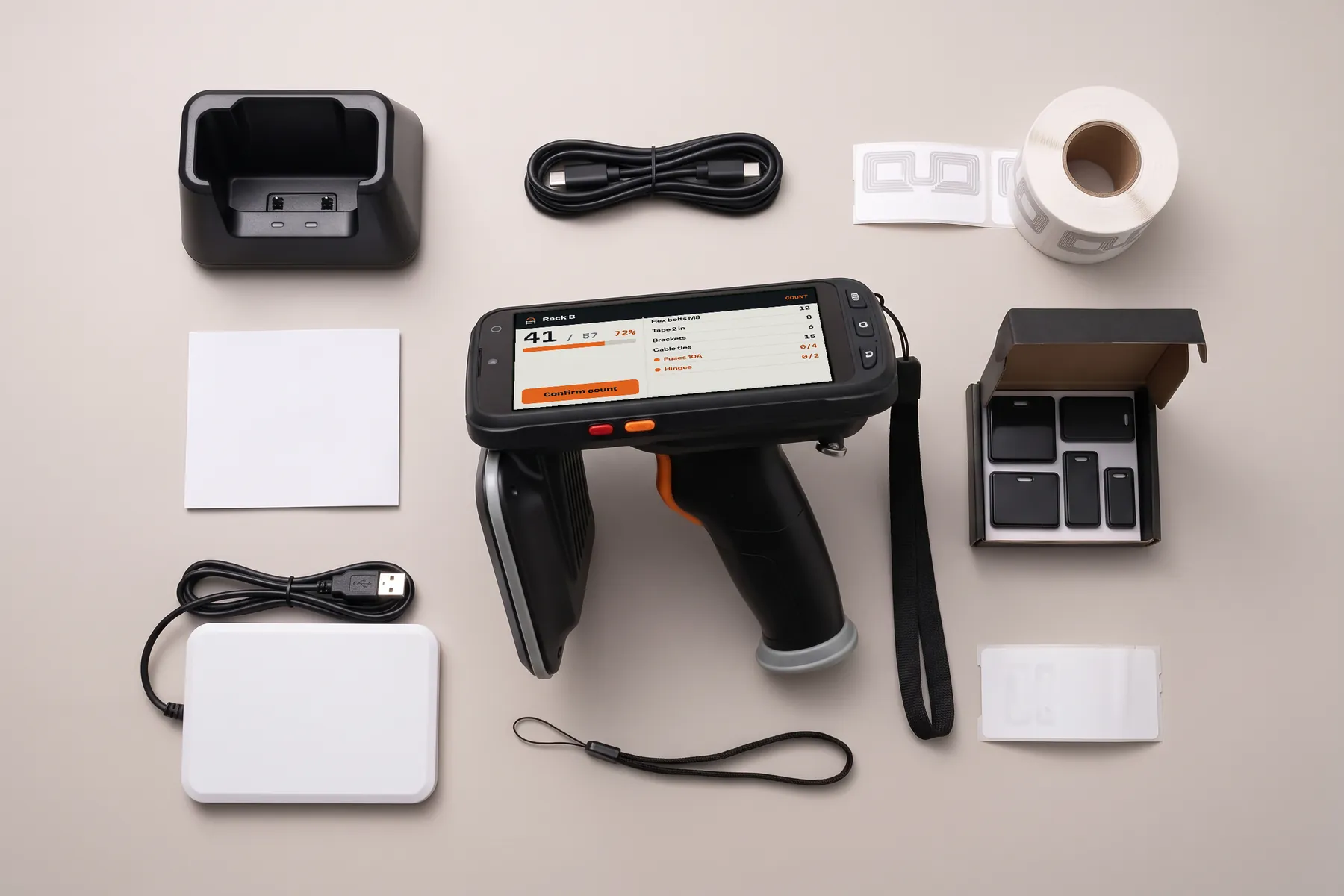
A UHF handheld, the right labels for what you store, and an optional desk reader for the counter. We configure every piece, enroll it in your account and ship it with the counting app installed.
The handheld
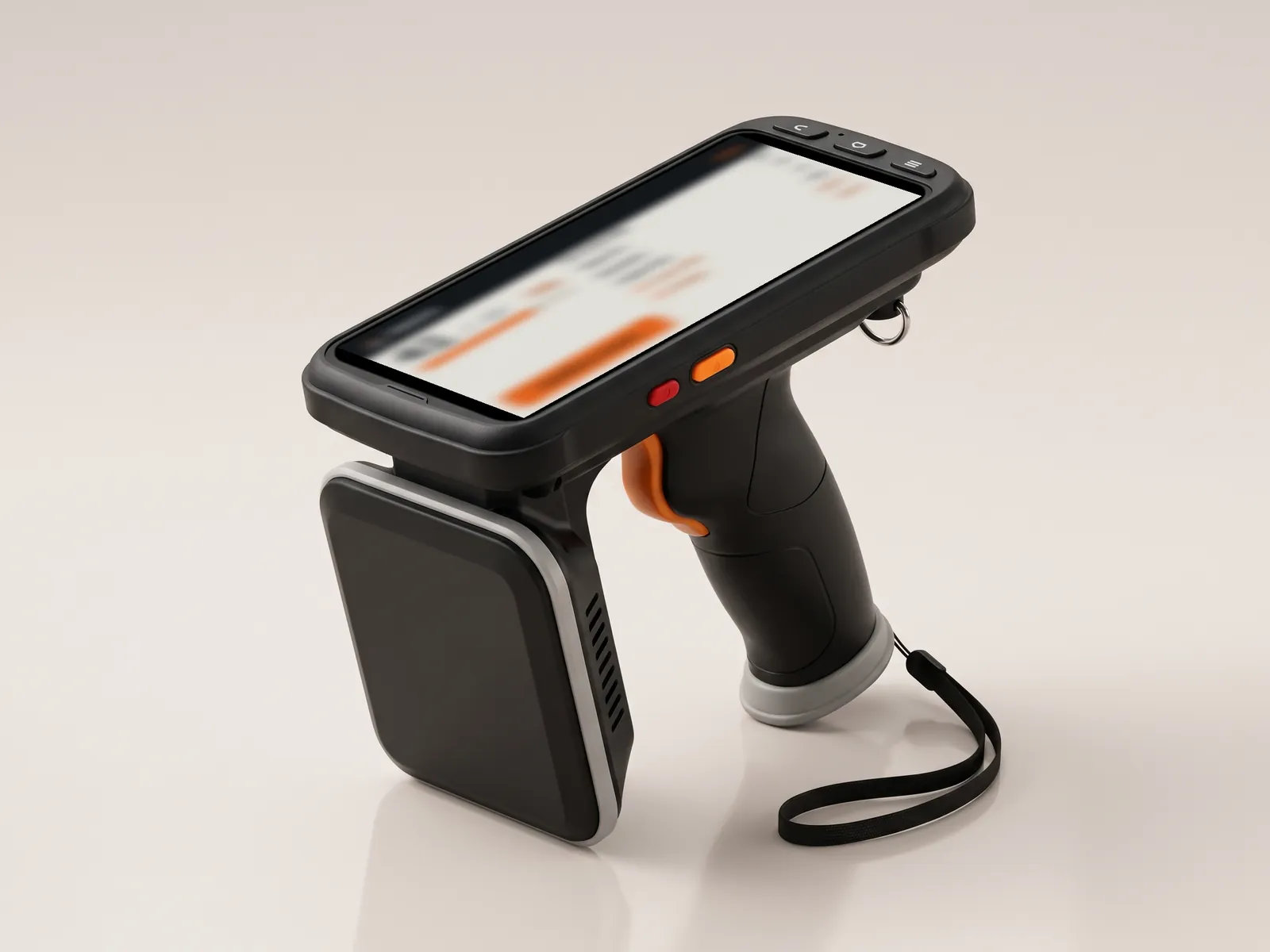
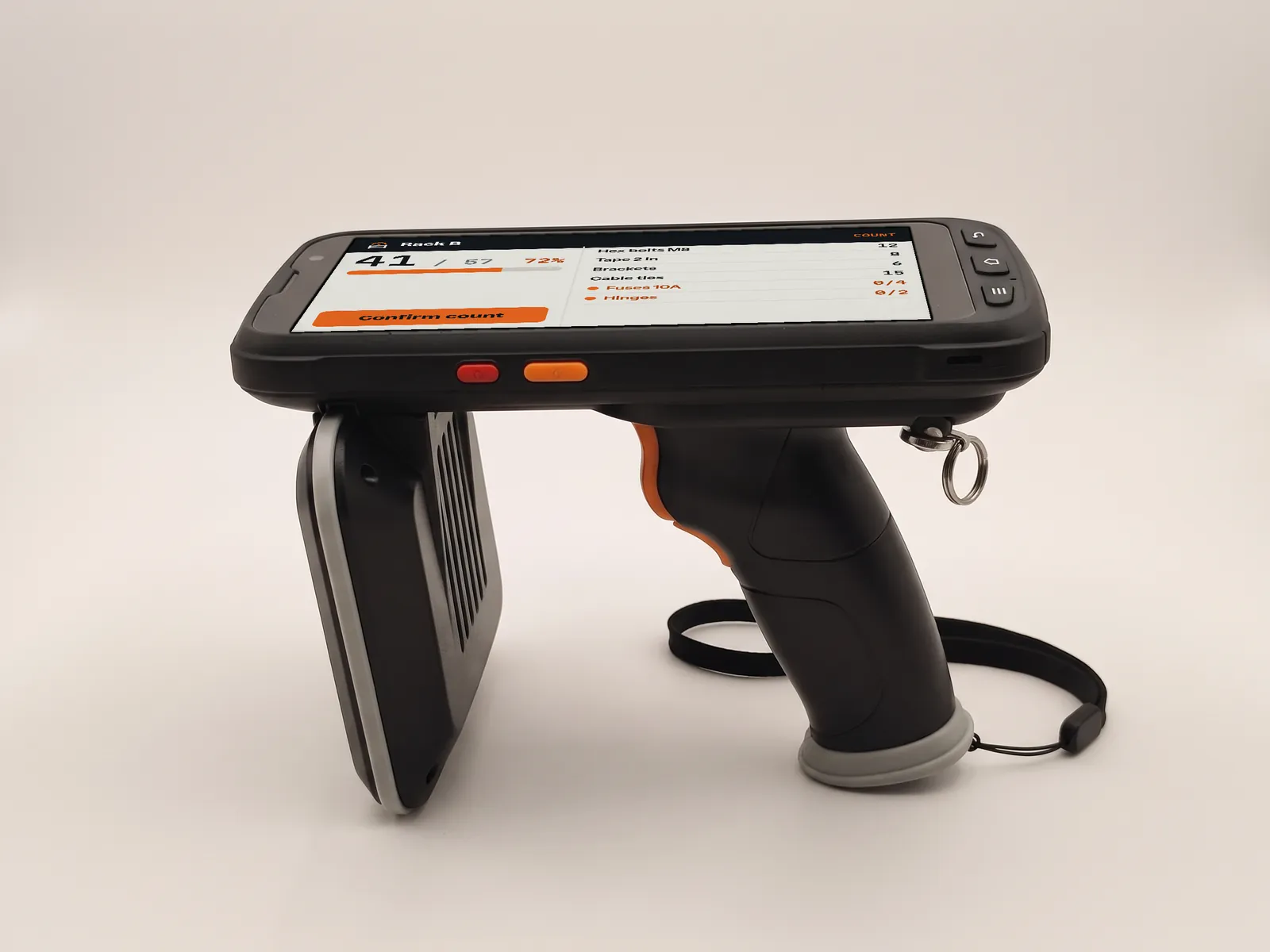
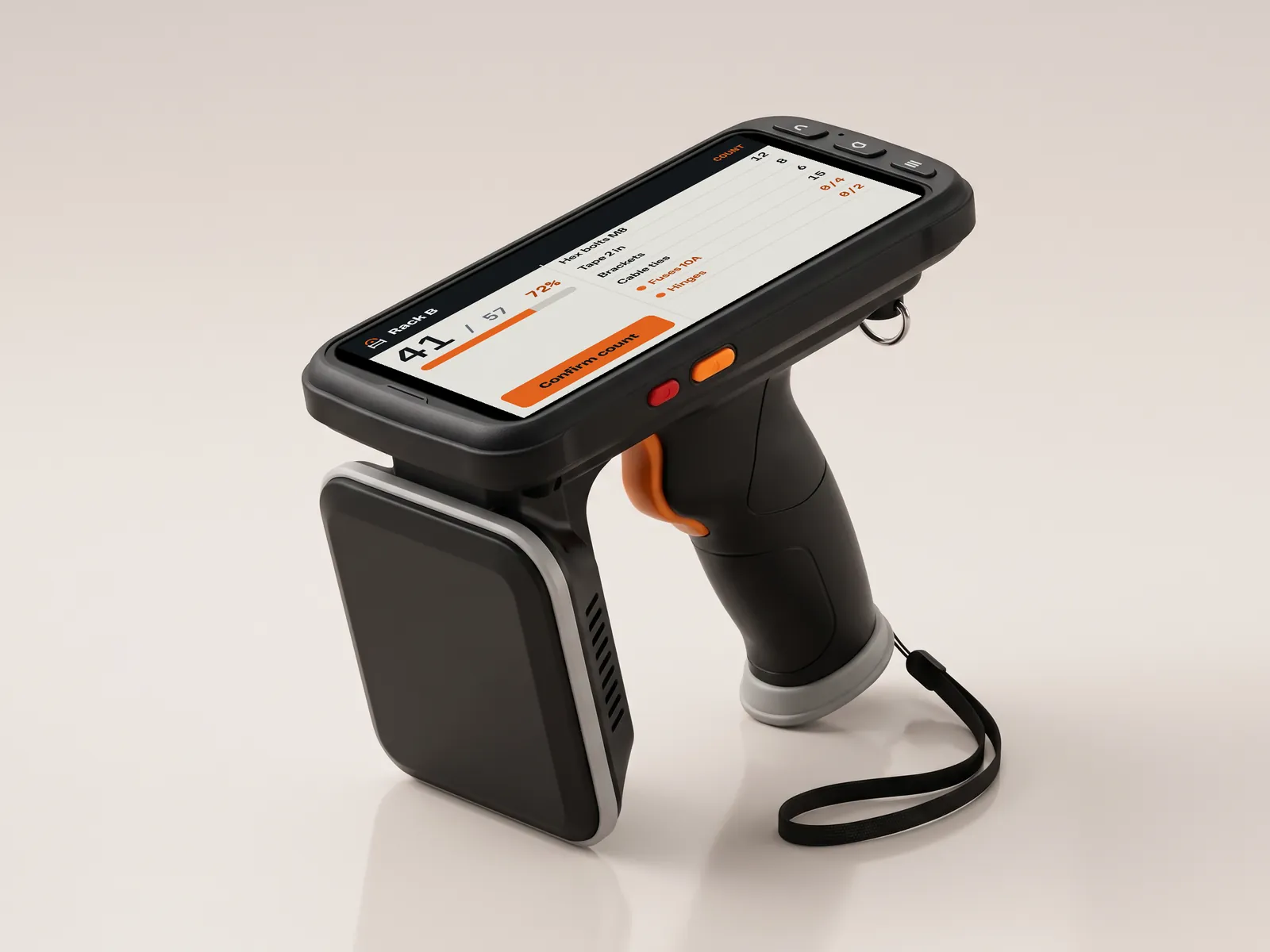
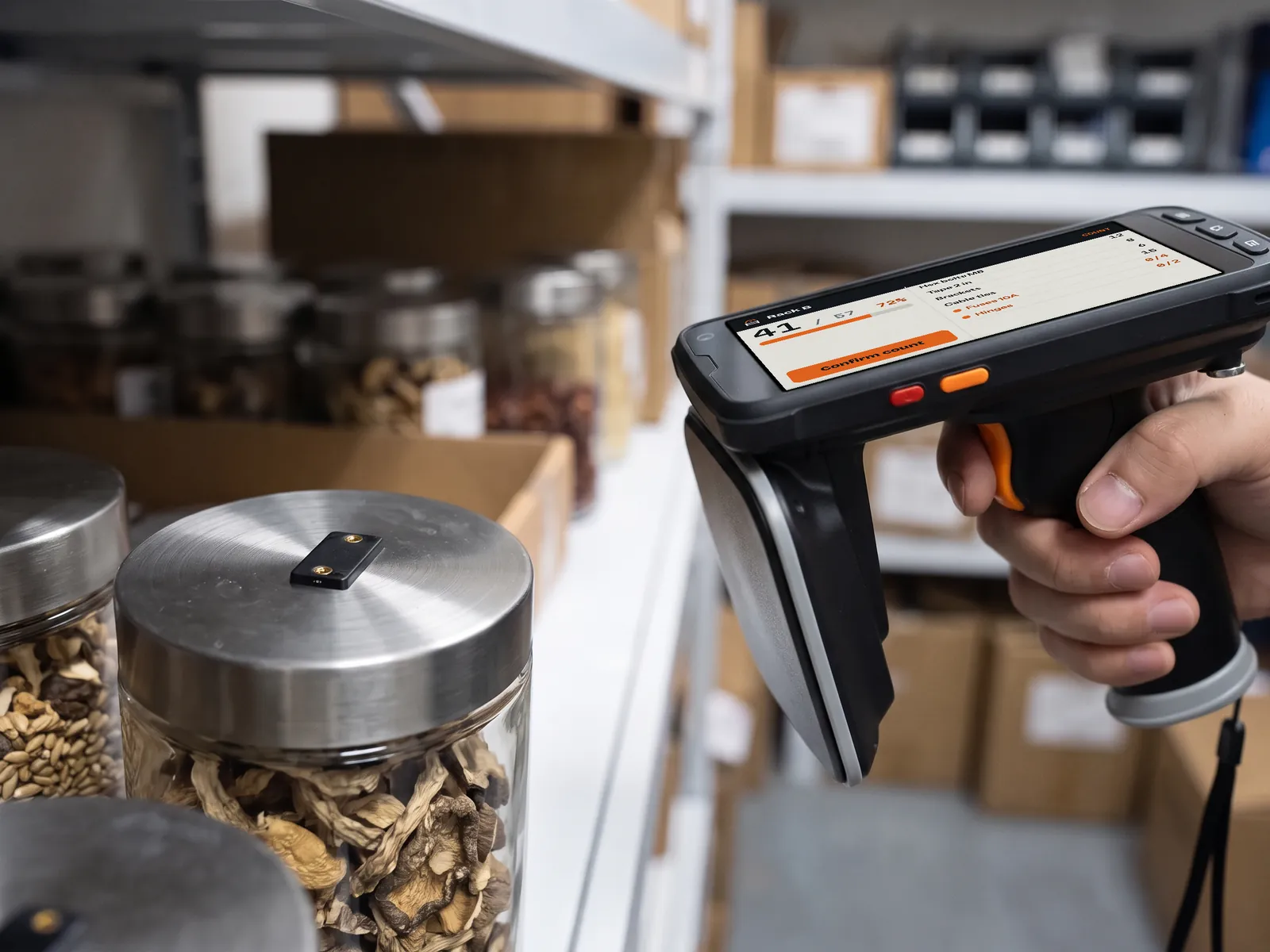
A pistol-grip Android reader with the UHF antenna in the paddle under the body and a barcode scanner in the nose. One device counts shelves, finds an item, links labels to items and scans the barcodes you already have.
- RFID
- Current-generation UHF reader chip, EPC Gen2 / ISO 18000-6C
- Band
- 902–928 MHz, the US band, set before it ships
- Barcodes
- 1D and 2D scanner built in
- Software
- Android. We install the OverRack counting app and sign it in to your account before it ships
- Battery
- Hot-swap pistol battery: change it without turning the device off
- Screen
- 5-inch touch screen, works with gloves
- Comes with
- Charging dock, case and wrist strap
Weight, drop and dust rating, battery hours and read range on your goods are confirmed with the sample unit before your quote, and the quote names the exact model. Already own an Android handheld with UHF? Tell us; some can run the app.
Labels and tags, by what they go on
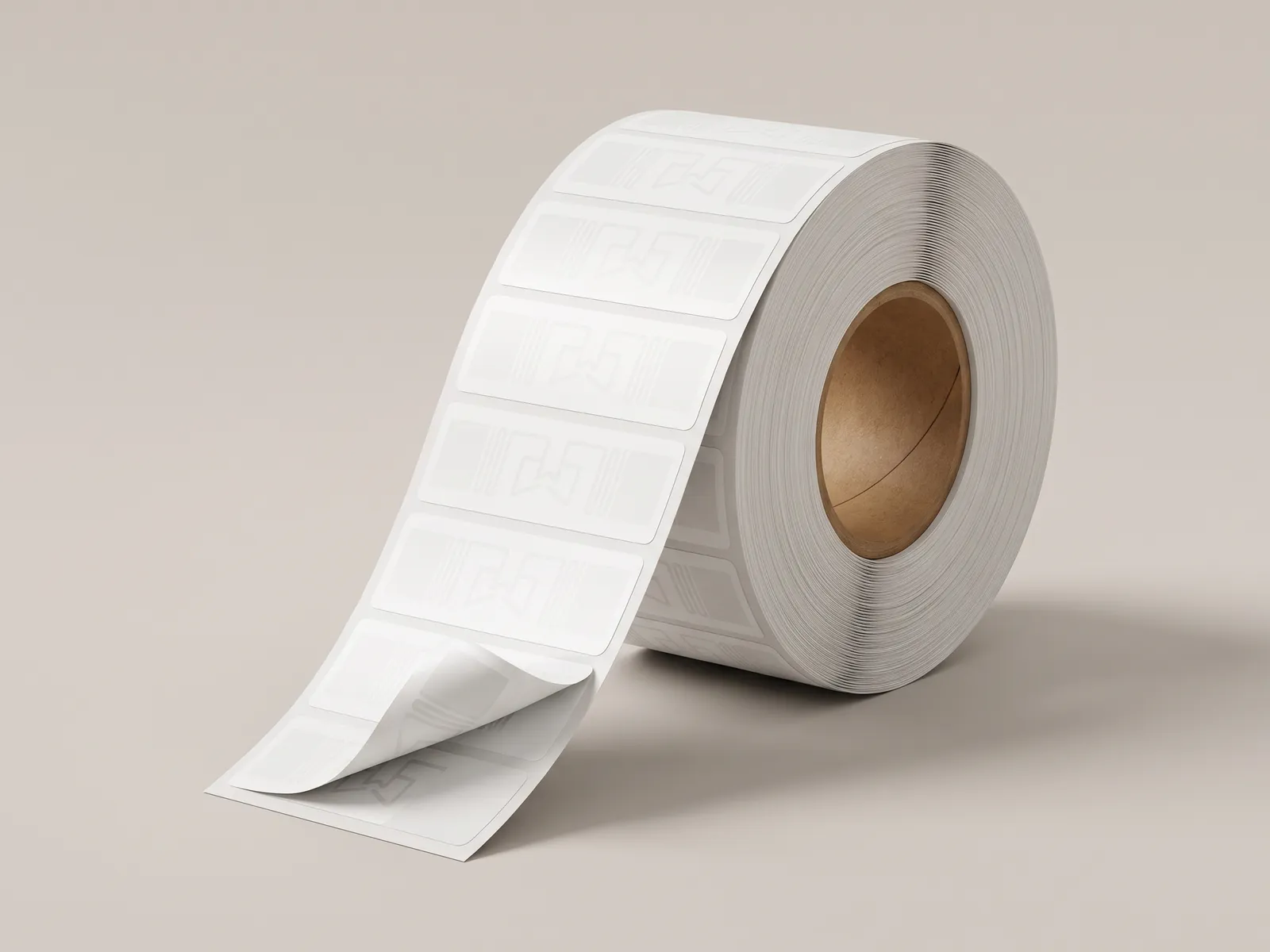
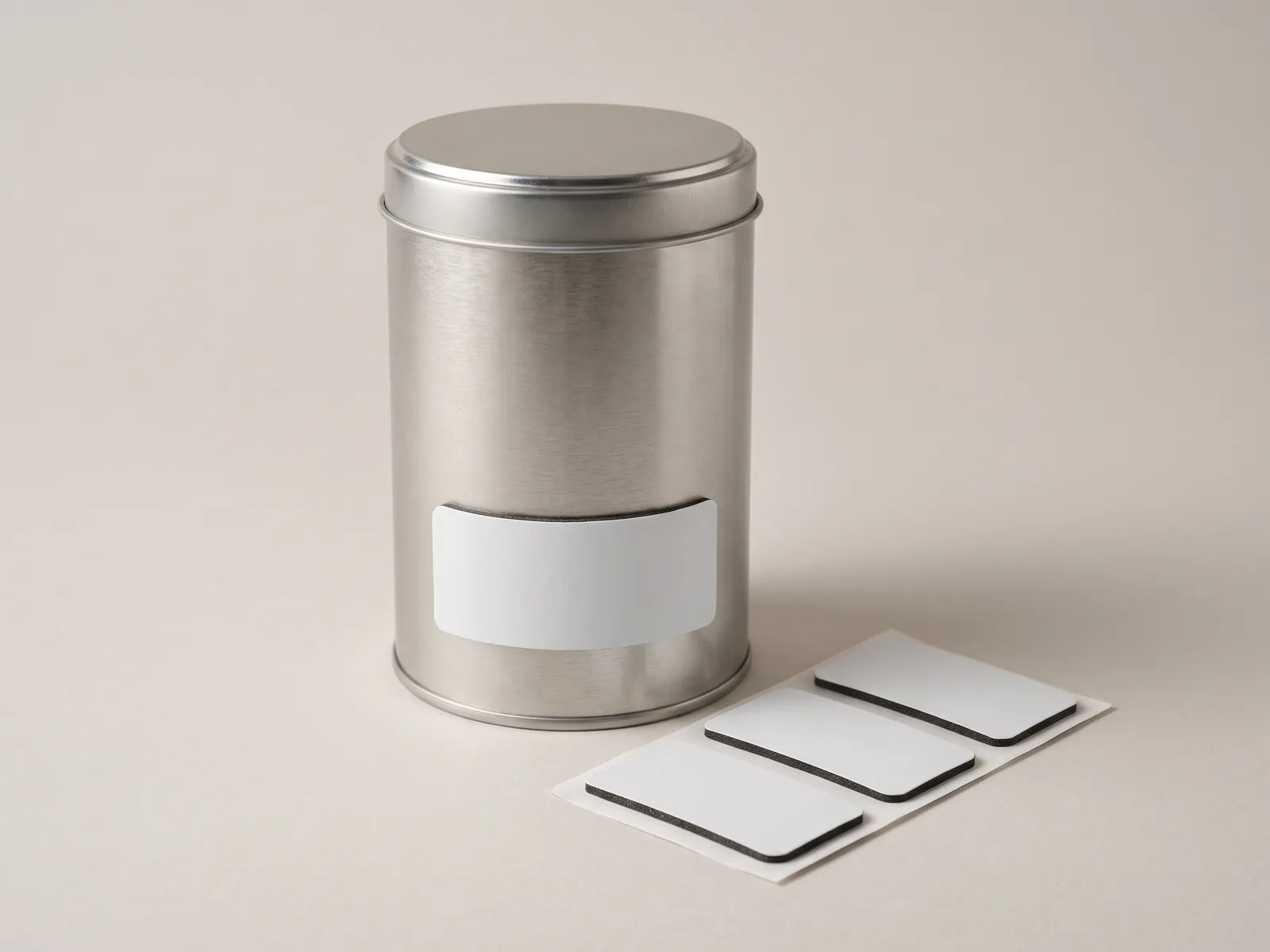
A paper label is cheapest and reads farthest on cardboard. On metal it goes silent, so metal gets a tag built with a spacer. The read test sorts your goods into these rows before anything is ordered.
| Goods | Use | Size | Read distance (US band) |
|---|---|---|---|
| Cartons, bins, bags, shelf edges | Paper label, pre-encoded | 73 × 20 mm | Confirmed with the sample. Plan on 1 to 3 m across a packed shelf. |
| Small boxes, folded stock | Paper label, pre-encoded | 48 × 18 mm | Confirmed with the sample; shorter than the large label. |
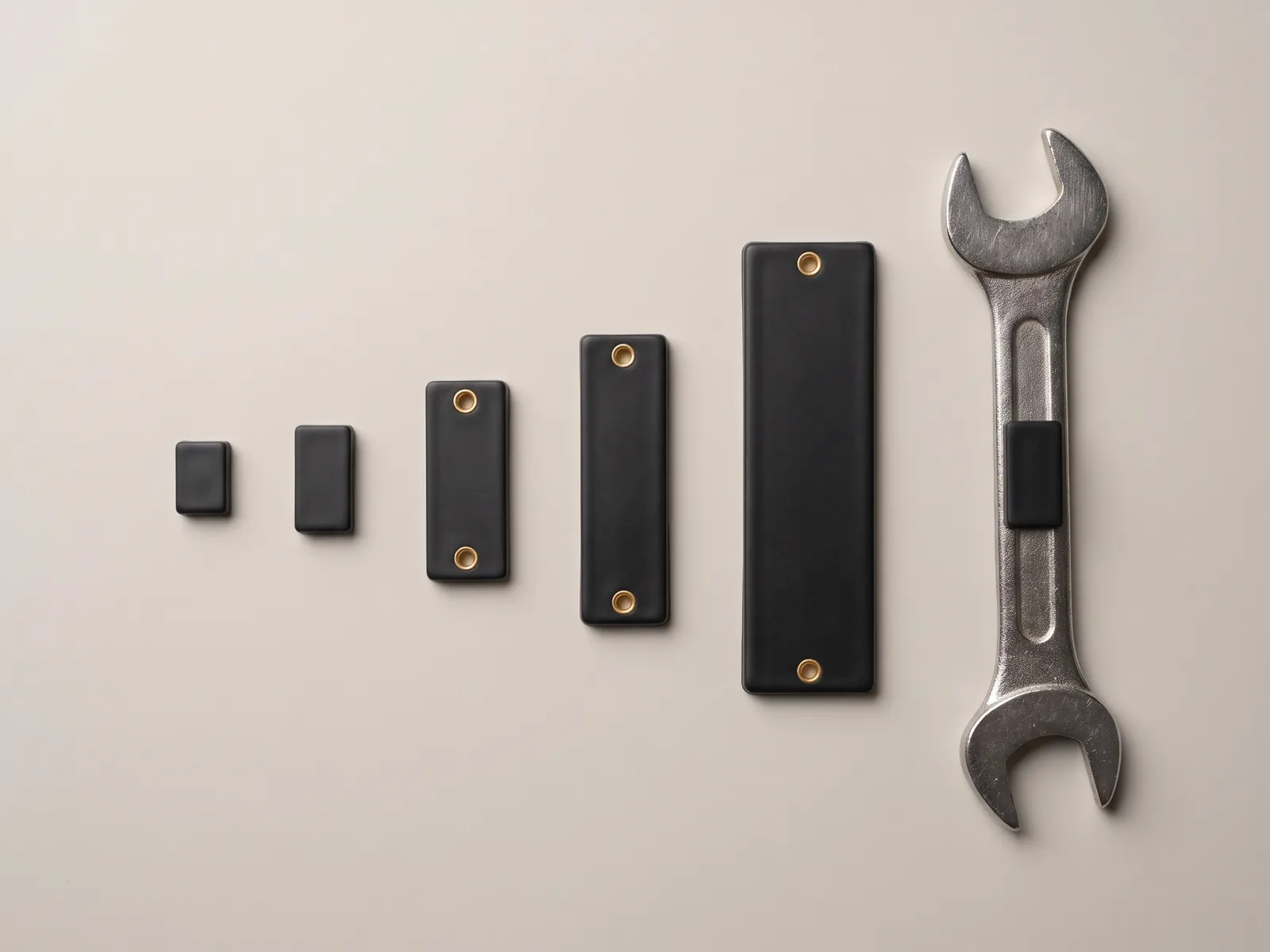
| Very small metal parts | Anti-metal tag, rigid, glued | 4 × 10 mm 11 × 7 mm | 1.0 m and 1.4 m |
| Hand tools, small flat metal parts | Anti-metal tag, rigid, two screw holes or glue | 12 × 9 mm 17 × 9 mm | 2.9 m and 3.8 m |
| Power tools, machines, cabinets, racking | Anti-metal tag, rigid | 36 × 13 mm 53 × 13 mm 95 × 25 mm | 5.0 m, 5.2 m and 6.5 m |
| Tins, cylinders, drums, curved metal | Flexible on-metal label, printable | 60 × 25 mm 70 × 30 mm | 5 m and up to 12 m on metal |
| Jars and cans with metal lids | Small anti-metal tag on the lid top, or a paper label on the glass side well clear of the lid and the contents | 11 × 7 mm 12 × 9 mm | 1.4 m and 2.9 m for the lid tags. A paper label on the lid won't read; we test both placements on your jars. |
| Bottles and liquids | Flexible label for liquids, on a dry flat spot away from the contents | 70 × 30 mm | 6.5 m on a liquid container |
| Rental gear that lives outside | The large rigid tag screwed on, or a hard tag cable-tied | 95 × 25 mm | 6.5 m for the rigid tag; hard tags confirmed with the sample |
Read distances for the US band (902–928 MHz), measured with a fixed reader at full power; we re-measure them with every pilot. A handheld reads shorter: 2 to 6 m in open air is realistic, 1 to 3 m across a packed shelf. Liquids and bodies absorb the signal, dense metal reflects it. That is why the read test uses your real items.
The desk reader, for the counter
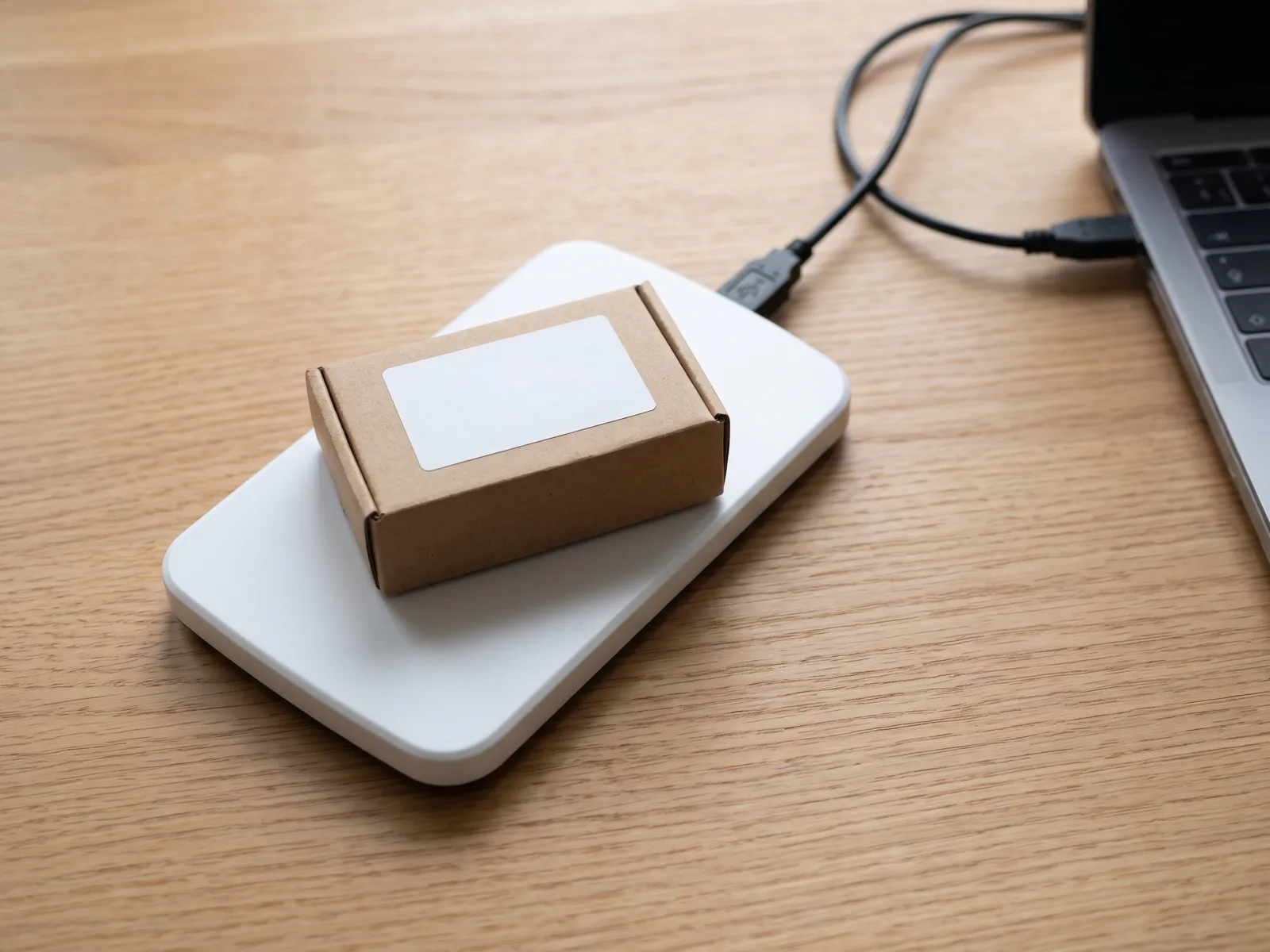
A flat USB reader the size of a paperback. It plugs into any computer as a keyboard, so when a tagged item is set on it the tag's number is typed straight into our web app. Nothing to install.
- Check-out and check-in: item on the reader, pick the person or job, done.
- Tagging at a desk: new item on the reader, scan its barcode or type its name, linked.
- Reads within about 80 cm, so it only sees what is on the counter, and can encode a blank label at the desk.
- 902–928 MHz, built-in antenna, 14 × 8.5 cm, one USB cable. Optional; the handheld does the same jobs in the aisle.
Set up and enrolled in your account before it ships. The same keyboard trick works with the handheld, which is how the web app gets reads even on a computer we have never touched.
What goes in a kit
Each quote lists the exact models and quantities for your site, after the read test.
- One handheld per site to start, with dock and case; a second for busy sites
- Pre-encoded labels and tags, by the rows above that your goods fall into
- A desk reader if you check items in and out at a counter (optional)
- A doorway or dock reader where a site survey shows it's worth it (later, optional)
- A desktop RFID label printer if you want your own SKU and barcode on the label face (optional)
Early access: we are testing hardware samples now, and the software is in development with pilot customers. Larger operations get it through the free savings assessment; one stockroom with a small team can ask for a starter quote.
Not sure which row your goods are in?
The free assessment includes a read test on your real items, in writing, with the label for each one. For one stockroom there is a starter quote after the same test.